新老娘舅
Chinese researchers identify target to develop depression drug using traditional ethnic medicine in Yunnan_我的网站

A | 生意社08月26日讯8月26日临汾古县市场炼焦煤竞拍价格有涨。低硫主焦精煤A≤9、S≤0.5、G≥80挂牌0.5万吨,起拍价2320元/吨,成交价2460元/吨,较上期8月19日成交均价涨97元/吨,以上均为出厂价现金含税。【大宗商品公式定价原理】生意社基准价是基于价格大数据与生意社价格模型产生的交易指导价,又称生意社价格。

B | 可用于确定以下两种需求的交易结算价:1、指定日期的结算价2、指定周期的平均结算价定价公式:结算价=生意社基准价×K+CK:调整系数,包括账期成本等因素。
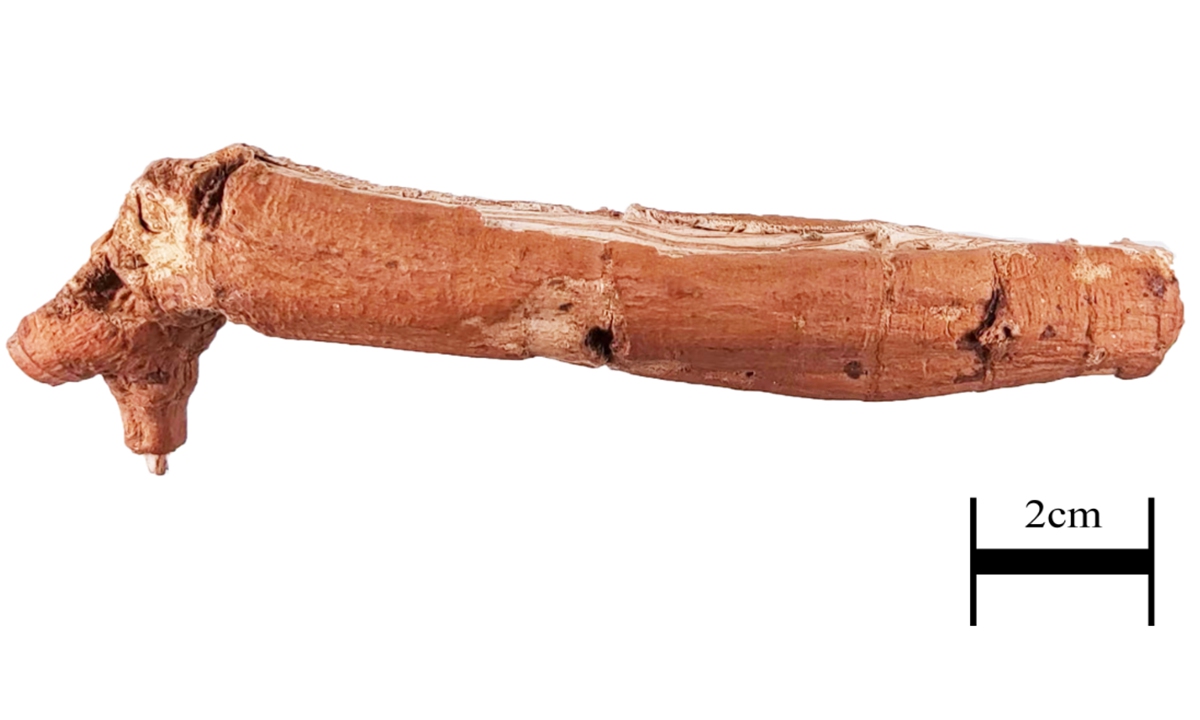
A Chinese research team has identified a new potential target to develop antidepressant drug from Qingyangshen, or Root of Auricledleaf Swallowwort, a traditional ethnic medicinal plant long used in Southwest China's Yunnan Province, according to Kunming University of Science and Technology, Science and Technology Daily reported Sunday.
The team, led by professors Xu Tianrui and Xiang Cheng from the university's School of Life Science and Technology, found that Qingyangshen glycosides, the plant's core active compound, can alleviate depression-related behaviors by simultaneously suppressing inflammation, reducing oxidative damage and stabilizing neurotransmitters in the brain.
The findings were published in the international journal Phytomedicine.
Depression has become a widespread mental health disorder globally, while existing clinical drugs fail to provide effective treatment for more than 30 percent of patients, according to the researchers. Previous studies have established a strong link between chronic inflammation and depression, but existing anti-inflammatory drugs have limited targeting capabilities, underscoring the need for new therapeutic targets and lead compounds.
Qingyangshen, a plant of the Cynanchum genus in the Apocynaceae family, has long been used as a traditional medicine by ethnic groups including the Naxi, Yi and Bai peoples in Yunnan, mainly for treating neurological conditions such as epilepsy and neurasthenia.
The researchers systematically examined the pharmacological effects of Qingyangshen extract and its core active compound, Qingyangshen glycosides. Tests using mouse, zebrafish and fruit fly models repeatedly showed that the compound significantly improved depression-related behaviors induced by inflammation, according to the report.
To identify the compound's target, the team developed a dual-discrimination model for four subtypes of prostaglandin E2 receptors and combined it with AI-powered machine learning. The researchers screened hundreds of G protein-coupled receptors and identified the prostaglandin E2 subtype 4 receptor as the direct target of Qingyangshen glycosides.
Multiple molecular experiments confirmed that the compound binds directly to the receptor and acts as an inhibitory ligand. Further experiments involving animals with the receptor knocked out in the hippocampus showed that the antidepressant effects of Qingyangshen glycosides disappeared completely when the receptor was absent, providing the first in-vivo evidence that the receptor is essential for the compound's therapeutic effects.
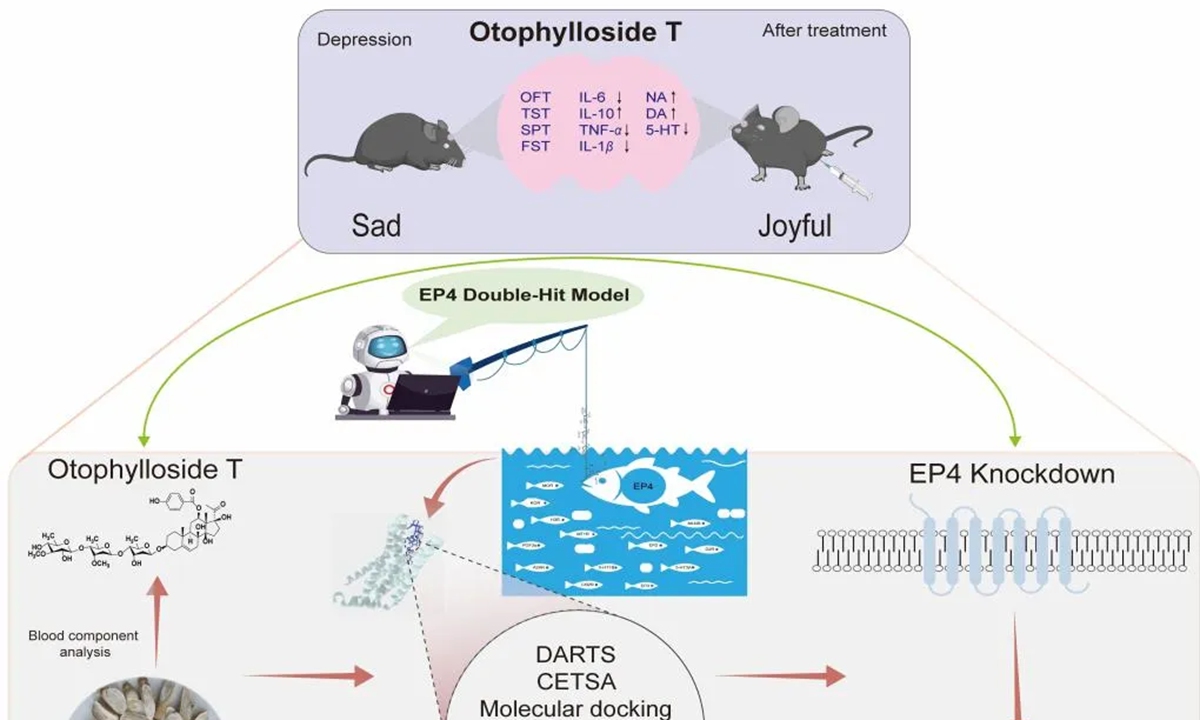
The study establishes the prostaglandin E2 subtype 4 receptor as a potential new target for antidepressant drug development and points to a new approach to treating depression through inflammatory pathways. It also identifies Qingyangshen glycosides as a potential lead compound for developing highly targeted anti-inflammatory antidepressants, creating a research chain from ethnic medicinal plants and active compounds to drug targets and new drug development.
Global Times
。

C | C:升贴水...。

D |
Current article:http://www.ninyakenhongnian.sbs/list_atppyw2/q6n.ppt
Published on:07:13:23
淄博新闻


- ·“台湾义勇队附设第二台湾医院档案”见证两岸同胞共御外侮历史
- ·福州:三艘“船”绘就文旅新画卷
- ·'I felt like I just started my career again': British Elvis revivalist finds his voice in China
- ·Iranian FM condemns Biden's remarks on recent protests in Tehran
- ·Journalist says she was detained for 3 years in China for breaking an embargo
- ·台风影响期间公共泊位免费 景观照明临时关闭
- ·小鹿妈妈牙线,在看不见的地方下足了功夫


