加勒比海盗
"Furnace city" emerges as "coolcation" magnet for global travelers_我的网站

A | 需要说明的是,这并不是科学记者的夸张之词。

B | 天文学家称这些系统为灾难性变星是一个恰当的描述。

C | 这个术语描述了一个白矮星和一个次级“正常”恒星的配对,前者是一颗曾经强大的恒星的密集残余物,后者跟太阳类似但质量可能较小。

D | 在这对组合的紧密轨道上,白矮星由于其极端的引力而从较大的恒星上吸走恒星物质。周三发表在《自然》上的新灾难性变量的发现其特点是一颗大小为太阳1/100的白矮星和一颗更大的恒星--约是太阳质量的10%并挤在一个木星大小的球体中。这对恒星距离地球约3000光年,其被标记为ZTF J1813+4251。
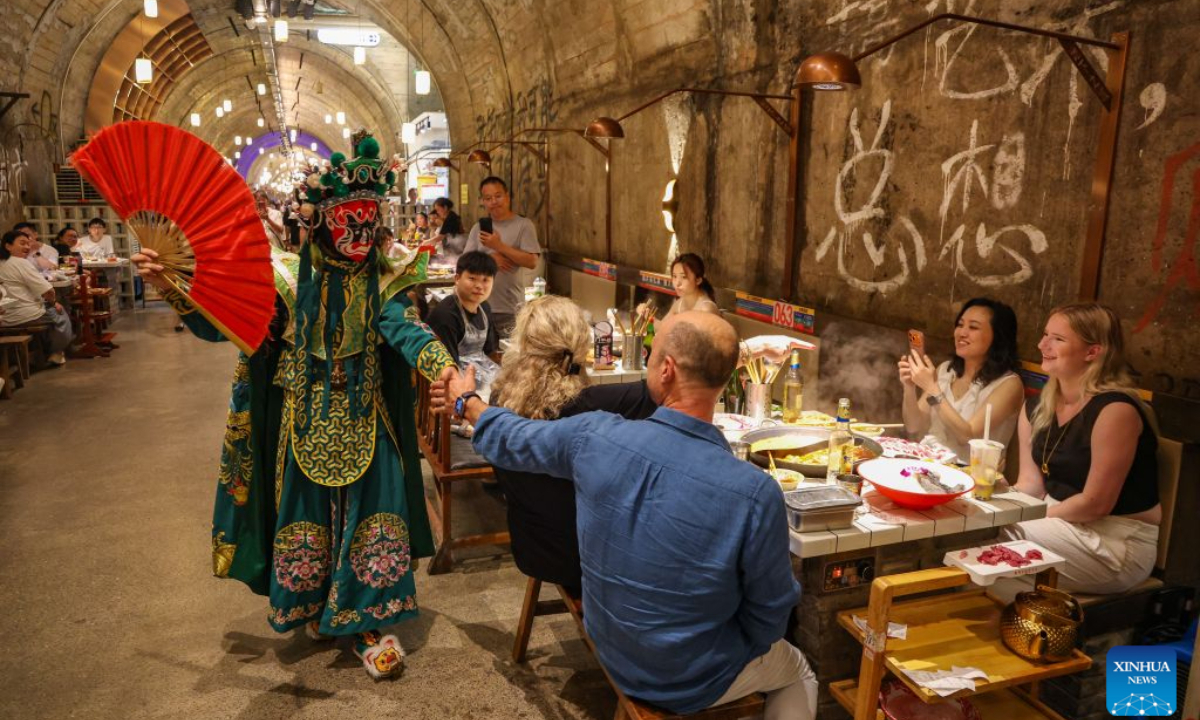
Foreign tourists enjoy hotpot while watching a Sichuan Opera face-changing performance inside a former air-raid shelter at the Underground City hotpot restaurant in Liangjiang New Area of southwest China's Chongqing Municipality, July 10, 2026. (Xinhua/Huang Wei)Despite outdoor temperatures nearing 40 degrees Celsius in southwest China's Chongqing Municipality, Australian tourist Roy Rostand was enjoying hotpot at a restaurant without air conditioning, apparently feeling no discomfort from the summer heat.
The answer to his comfort lies in the restaurant's unlikely location. This hotpot restaurant, named Underground City, is hidden inside a former air-raid shelter, one of the city's distinctive spaces offering natural coolness.
"It's amazing that the restaurant stays so cool even in scorching summer heat," Rostand said. "Chongqing has given me the chance to experience something I can't find in Australia."
Chongqing has long been dubbed one of China's "furnace cities" for its sweltering, humid summers. In July alone, the city endured 26 consecutive days of high heat, with temperatures breaching 40 degrees Celsius for a full week and topping out at a scorching 41.6 degrees.
The blazing heat, however, has failed to dampen the enthusiasm of global travelers. According to the Chongqing General Station of Exit and Entry Frontier Inspection, more than 610,000 inbound and outbound trips by foreign nationals were recorded at Chongqing Jiangbei International Airport in the first half of the year, marking an 86-percent surge year on year. The top five source countries were Thailand, Malaysia, Singapore, Vietnam and Indonesia.
European travelers proved to be a standout growth driver. Data from Trip.com shows that as of July 21, inbound travel bookings from Europe to Chongqing for this summer season climbed by over 40 percent year on year, while scenic spot ticket orders surged by 214.7 percent and activity-based bookings rocketed by a staggering 6,900 percent.
Thanks to China's visa-free policies and other travel facilitation measures, Chongqing is rapidly gaining traction as a go-to "coolcation" hotspot for international visitors. Creative cool-off spaces, diverse travel experiences and comprehensive summer services have all contributed to its rising appeal.
UNDERGROUND COOL
Chongqing's summer cooling secrets were first found underground. Since the late 1930s, the city has carved thousands of air-raid shelters into its mountainous terrain.
Once serving as sanctuaries for civilians during the Chinese People's War of Resistance against Japanese Aggression, these spaces have now been repurposed as hotpot restaurants, tea houses and venues for Sichuan Opera performances, providing both refreshing coolness and preserving the city's living memories.
"The temperature inside the shelters remains around 25 degrees Celsius all year round, making them natural cool retreats," explained Wang Jing, marketing director of Underground City.
"We serve more than 300 tables a day on weekends," she added. "Right now, about one in every six diners is from overseas. And we're seeing more and more visitors from Southeast Asia and Europe."
Annika, a tourist from Germany, revealed that the restaurant has gone viral on overseas social media platforms. "We were attracted not only by this unique way of escaping the summer heat, but also by the opportunity to dine in a place filled with history and culture," she said.
CHASING CHILL
On August 1, Chongqing issued an orange heat alert. At a water park in its Fuling District, 10 tonnes of industrial ice were dumped directly into the wave pool. Half-submerged in the refreshing water, visitors could splash around or even play mahjong at custom-made tables in the pool.
This unique summer cooling scene has attracted coverage from mainstream media in countries including Russia and Canada, with overseas outlets reportedly dubbing it the most intriguing summer spectacle in China this year.
At Chongqing Xingrui international travel service, inquiries from cross-border travelers hailing from hot and humid regions such as Vietnam, Laos and Indonesia have risen notably in recent weeks.
Peng Hengcong, head of the travel agency, said they have rolled out themed tour products, including "cool retreats in the mountains" and "gorge rapids adventures," tailored to overseas visitors seeking summer cooling experiences. These products cover areas with higher altitudes or rich water systems in Chongqing, with the highlight being a "23°C summer" experience.
Luo Zibai, an expert with the China Tourism Academy, believes that Chongqing's sustained popularity among travelers lies in its ability to fully leverage its distinctive strengths and develop differentiated tourism products that offer a broad spectrum of experiences.
URBAN REFUGE
Chongqing is weaving a citywide "cooling network" -- ranging from shopping malls to public facilities, and from indoor spaces to outdoor areas.
At a shopping mall called The Ring in the city, visitors are greeted not by endless rows of shops, but by a lush indoor rainforest. With misting systems and carefully designed lighting, the mall keeps the temperature at about 21 degrees Celsius, creating a cool, dreamy summer escape.
"I like Chongqing a lot because it has its own character," said Bilal Badri, who was visiting from the Netherlands. "The way nature and the city's landscape blend together here is just perfect."
The cool experience extends beyond the mall. In the Mountain City Alley historic district, a 400-meter-long pedestrian walkway has been transformed into a "cooling corridor," where misting systems and shaded areas reduce the perceived temperature by 3 to 5 degrees Celsius.
In addition, since July 8, Chongqing's rail transit system has set up cooling zones in 158 metro stations, offering free air-conditioned spaces and heat-relief supplies to residents and tourists alike.
"Chongqing's creative and thoughtful ways to help people beat the summer heat are impressive. It's really interesting to discover these unique experiences," said Alexandra, a Romanian tourist. "This time I didn't stay long enough to explore more of the city, and I'm planning to come back in the near future."
。它是在兹威基瞬变设施拍摄的图像中被发现,这是一项广域调查,其使用加州帕洛玛天文台的一台望远镜并依次拍摄数百张天空图像。兹威克瞬变设施目录使天文学家能寻找恒星亮度的快速变化。这就是研究人员发现这对奇特的星体的方式。“这是一个特殊的系统,”麻省理工学院的天体物理学家Kevin Burdge说道。他指出,这是已知的行为最优美的灾难性变数之一。Burdge和他的同事们搜索了茨威基的数据以试图在深黑的太空中找到灯塔。他们希望看到有规律的眨眼特征--Burdge通常在寻找快速的眨眼,这是因为它们往往是一对恒星快速运行的信号。

E | 研究小组看到ZTF J1813+4251每51分钟闪烁一次。据悉,这是其中一颗恒星从另一颗恒星前面经过并使其光线变暗。闪烁的时间跟迄今为止发现的灾难性变星的最短轨道相吻合。通过用夏威夷和西班牙的其他望远镜以及天基望远镜进行观测,这使得研究人员对恒星变得更加集中,并能更准确地测量它发出的光线。不过这引发了一个难题。Burdge在一份新闻稿中指出:“有一颗恒星看起来像太阳,但是太阳无法进入一个短于8小时的轨道。”太阳的质量使它无法拥有如此紧密的轨道。那么为什么这颗木星大小的恒星会这样做呢?Burdge和研究小组已经确定的解释是,这颗白矮星一直在吞噬其伙伴星的一大块氢。

F | 这留下了一个更密集的氦气核心,而这有助于稳定紧密的轨道。

G | 简而言之,研究小组是在这一过程的中间阶段观察这对恒星的,当时白矮星已经剥去了大部分的氢。剥离后的白矮星留下了一个吸积盘,它像土星环一样围绕着核心。

H | “这是一个罕见的案例,我们在从氢到氦的吸积过程中抓住了其中的一个系统,”Burdge说道。在12亿颗恒星中,该算法挑出了我们迄今发现的最有趣的灾难性变数之一。这一幸运的发现有助于支持早先提出的关于大灾变体过渡到超短轨道的理论,该理论是在近四十年前提出的--现在我们知道这确实发生了。该小组还进行了模拟以确定ZTF J1813+4251的最终命运。

I | 他们预测,在约7000万年后,这对天体将更快地围绕对方运行,每18分钟做一次完整的循环。尽管人们不会看到它,但一旦激光干涉仪空间天线(LISA)在2030年代末的某个时候进入轨道,那么研究人员将能更详细地研究这个灾难性的变量。这一系列卫星将被用来探测引力波--这些恒星舞伴将产生引力波。
Current article:http://www.ninyakenhongnian.sbs/list_0ib/2nw.html
Published on:02:20:18


 彭博社:普京无法提供足够的条件来获得中国在乌克兰的帮助
 斯基拉:恩波利700万欧元能买断科隆博,米兰没有回购权
 関東各地で山火事相次ぐ 自衛隊ヘリなどが消火活動 栃木・鹿沼市 茨城・常陸太田市 ともに未だ延焼続く 神奈川・小田原市 鎮圧も消防隊員1名が体調不良で緊急搬送
 小米澎程N90转弯半径仅5.95m!官方一镜到底实测:转向灵活 没有笨重感
 山西省投资促进局原党组书记、局长杨春权被“双开”
 曝 9 月或是机圈史上最激烈新品月,“华米 OV 耀”旗舰新机将轮番登场


